
Rome is a playboy in a stained shirt, a beautiful woman with long fingers and chipped nail polish.”
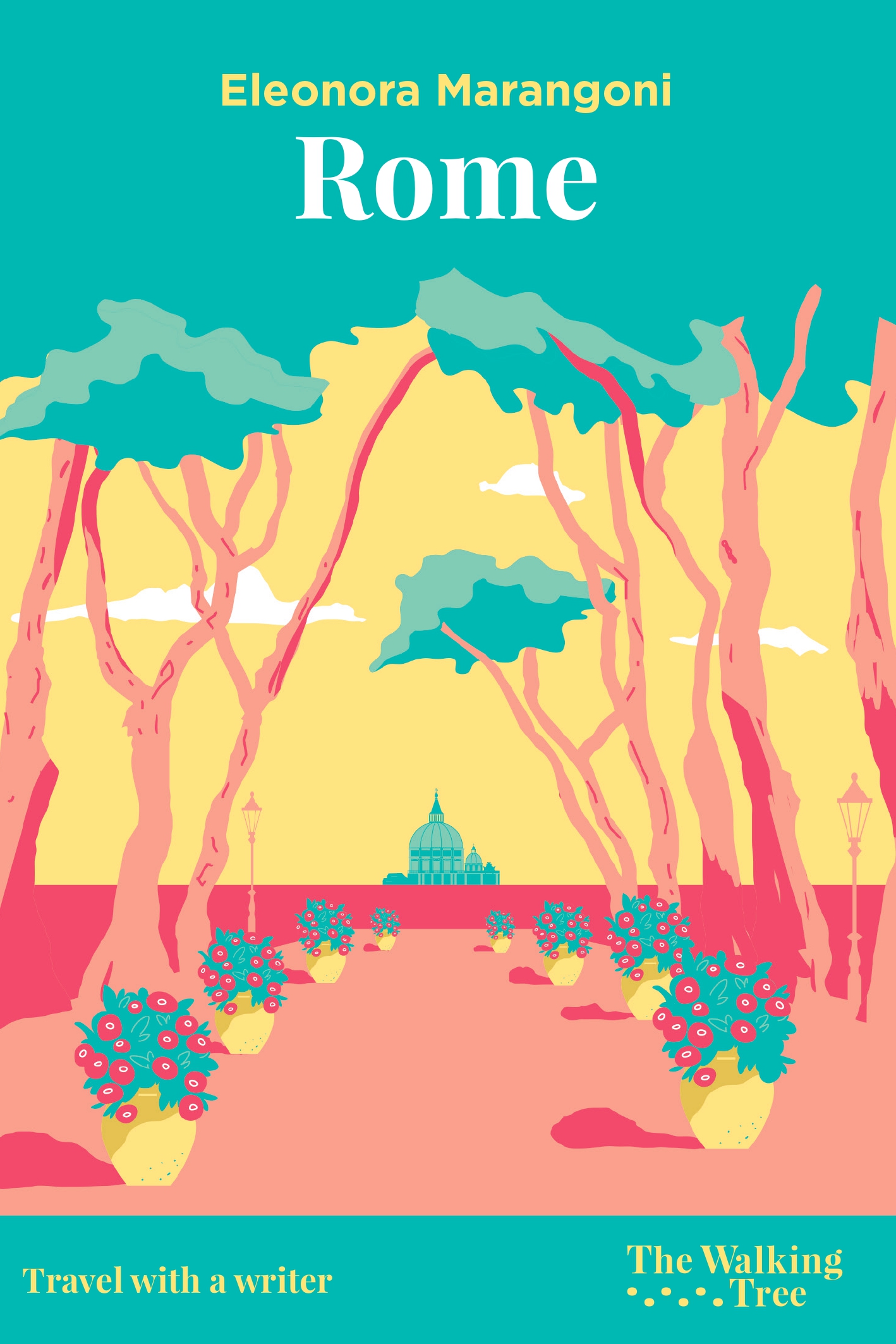
Eleonora Marangoni

Rome

Translated from the Italian by Dario Diofebi

In Rome, the past never quite stays in the past. Residents and visitors alike are faced at every turn with some monument to millennia of complex history—most often right next to the latest fad in tourist-trap technology. “You could say it’s a place where time stands still,” writes Eleonora Marangoni, “but that wouldn’t be accurate. In a certain sense, time doesn’t exist here.”

Caught between a classical Roman youth—days passed in reverie among friends, nights spent sneaking into forbidden places—and the nostalgia of an adult who’s moved away and then returned, Marangoni surveys each of the seven hills that make up the heart of Rome, from the Aventine to the Esquiline. Mixing urban history, cultural touchstones, family anecdotes, and overheard conversations, she shows a place that absorbs, seduces, and refuses to ever fully change.

Written with precision but also irony, with evident love and hopeless devotion but a bracing absence of sentimentality, Rome is a series of interwoven stories about a city at once magnificent and unstable, fatalistic and lusty, urgently contemporary and, yes, timeless.

Read a sample

Eleonora Marangoni was born in Rome in 1983. She is the author of a book about Proust and Italian painting, and of a first novel, Lux, which was a finalist for Italy’s prestigious Strega Prize.

Travel with a Writer
The Walking Tree’s global literary travel series presents places with a combination of dynamic storytelling, insightful observation, cultural references, and curated itineraries.

Written by acclaimed authors who know their subject intimately, these books give even armchair tourists a local’s understanding of the place: its rhythms, its customs, its contradictions, and the thousands of everyday details that make it tick.

Place by place, a global literary atlas takes shape.

"

The sky began to turn pink, then blue. The swallows disappeared, replaced by seagulls. And suddenly we were seized by a great sense of tenderness: for the time that had passed, for the love we had shared, for everything we'd done together and everything we never would. We hugged—a clumsy, uncomfortable thing, because it's hard to hug while sitting on the steps of a church. Then we hugged again, this time standing by my car. And we returned to our respective lives, our respective traffic jams, favorite radio stations, corners of town framed through the car window at traffic lights— each back to our neighborhood and our stories. It was an afternoon like many others, yet so memorable in its simplicity, its lack of ambition. We owed ourselves a moment like that one, and I'm sure that if we'd met in a less neutral place, somewhere less quiet, less beautiful, or simply different, our encounter wouldn't have been as intimate—maybe not even as right.

Many years have passed since then. When I found myself writing about it, I realized I'd never even known the name of that piazza. So, a few days ago, on my way to the farmer's market, I walked over to check: incredible as it sounds, it's called Piazza della Consolazione: consolation square. The palm knows, there's no doubt—and San Teodoro too, it seems. When I arrived at the market I must have had a strange look on my face, because the fruit seller I always buy from looked at me and said, "What's up, honey? Did someone make you cry?"

No, I wanted to tell him, quite the opposite, but he didn’t give me time. He offered me a couple of cherries to taste, then turned to serve his next customer.

  • PUB DATE  January 26, 2027 
  • Original paperback with flaps
  • Page count: 176
  • Print: $18.95 – 9782919841042
  • Ebook: $9.95 – 9782919841240